 MOOTROPIC
💧
Moo-lyte, explained
Electrolytes: hydration isn't just water
TL;DR
Water goes where sodium goes. Electrolytes — sodium, potassium, magnesium and calcium — control fluid balance, nerve signals and muscle contraction. When you sweat you lose them, and plain water alone can't fully restore balance.
100 mg/scoop
Sodium
200 mg/scoop
Potassium
2
key studies cited
1
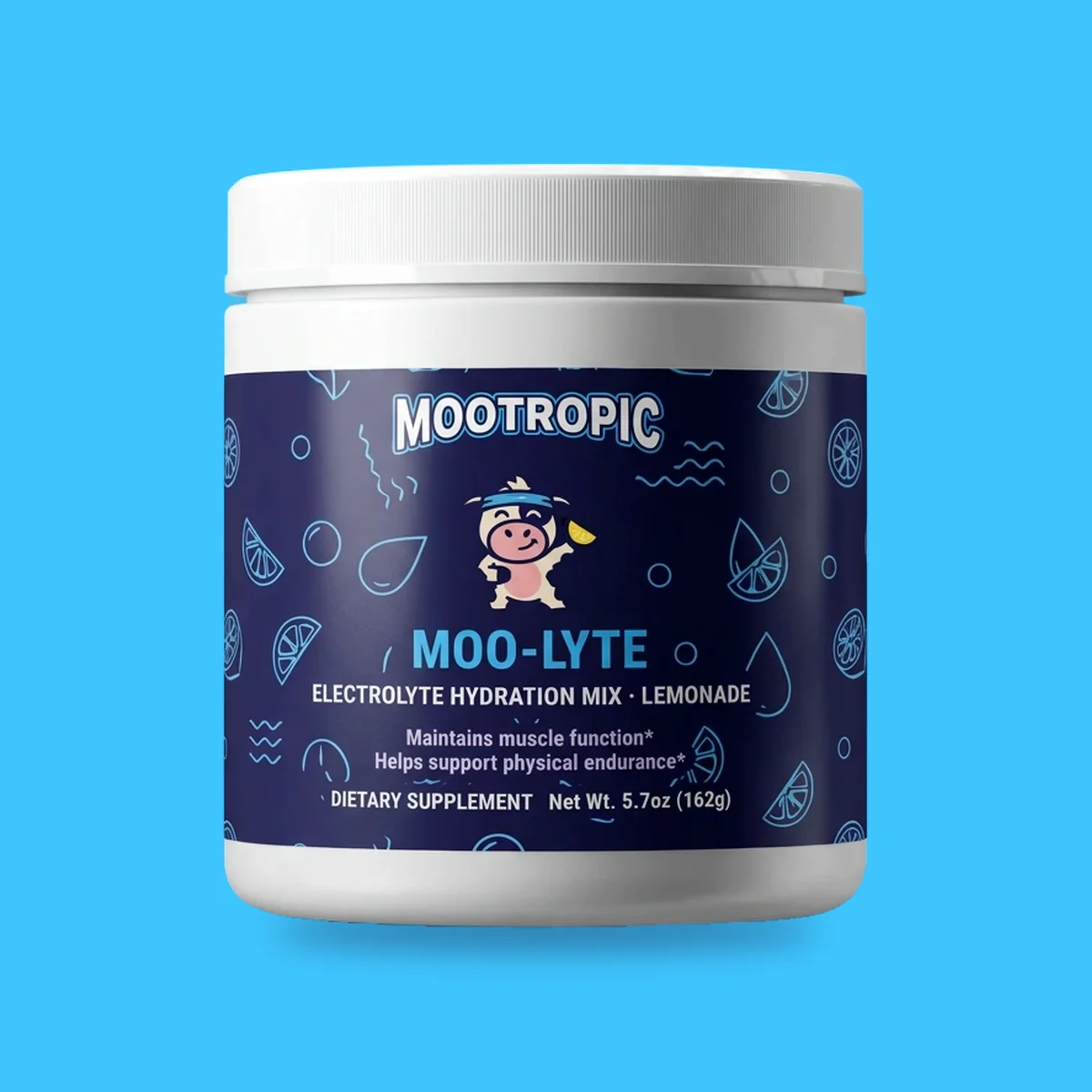
Mootropic product
How it works
- 1
Sweat
Lose ~0.5–2 L/hour and ~200–2,000 mg sodium per liter during exercise.
- 2
Replace
Sodium + glucose co-transport pulls water across the gut wall.
- 3
Retain
Sodium keeps fluid in your bloodstream instead of flushing it out.
- 4
Fire
Potassium & magnesium keep nerve and muscle signals firing.
- 5
Perform
Supports hydration, muscle function and performance.*
Why plain water isn't always enough
Drink lots of plain water after heavy sweating and much of it goes straight through you — your kidneys keep blood sodium in a tight range. Adding sodium helps your body hold on to fluid.
Even mild dehydration (around 2% body weight) is associated with reduced endurance, worse mood and lower concentration.
The four we use
Sodium for fluid retention, potassium for cellular hydration and heart rhythm, magnesium for muscle and nerve function, and calcium for contraction. B-vitamins support energy metabolism. Zero sugar, sweetened with sucralose.
Our dose vs. the research
- Sodium100 mg/scoop
- Potassium200 mg/scoop
| Compound | Mootropic | Studied range |
|---|---|---|
| Sodium | 100 mg/scoop | 300–700 mg/L during prolonged exercise (ACSM) — use 2 scoops for long, sweaty sessions |
| Potassium | 200 mg/scoop | Replace sweat losses; ~150–300 mg/L |
⏰ When to take it
- Before, during or after workouts over 60 minutes.
- Hot days, flights, saunas and long days.
👍 Great for
- Heavy sweaters & endurance athletes
- Hot climates & travel
- Low-carb or keto diets (higher sodium losses)
⚠️ Cautions
- If you have high blood pressure, kidney disease or a sodium-restricted diet, check with your doctor.
Key studies
- 1
ACSM position stand on exercise and fluid replacement.
Sawka M.N. et al. (2007). Med Sci Sports Exerc 39(2):377–390.
- 2
Review of sweat composition and factors driving electrolyte loss.
Baker L.B. (2017). Sports Medicine 47(Suppl 1):111–128.
This page is for education, not medical advice. Studies cited used specific doses and populations; individual results vary. Talk to your healthcare provider before starting any supplement.
Find it in
*These statements have not been evaluated by the Food and Drug Administration. These products are not intended to diagnose, treat, cure, or prevent any disease.